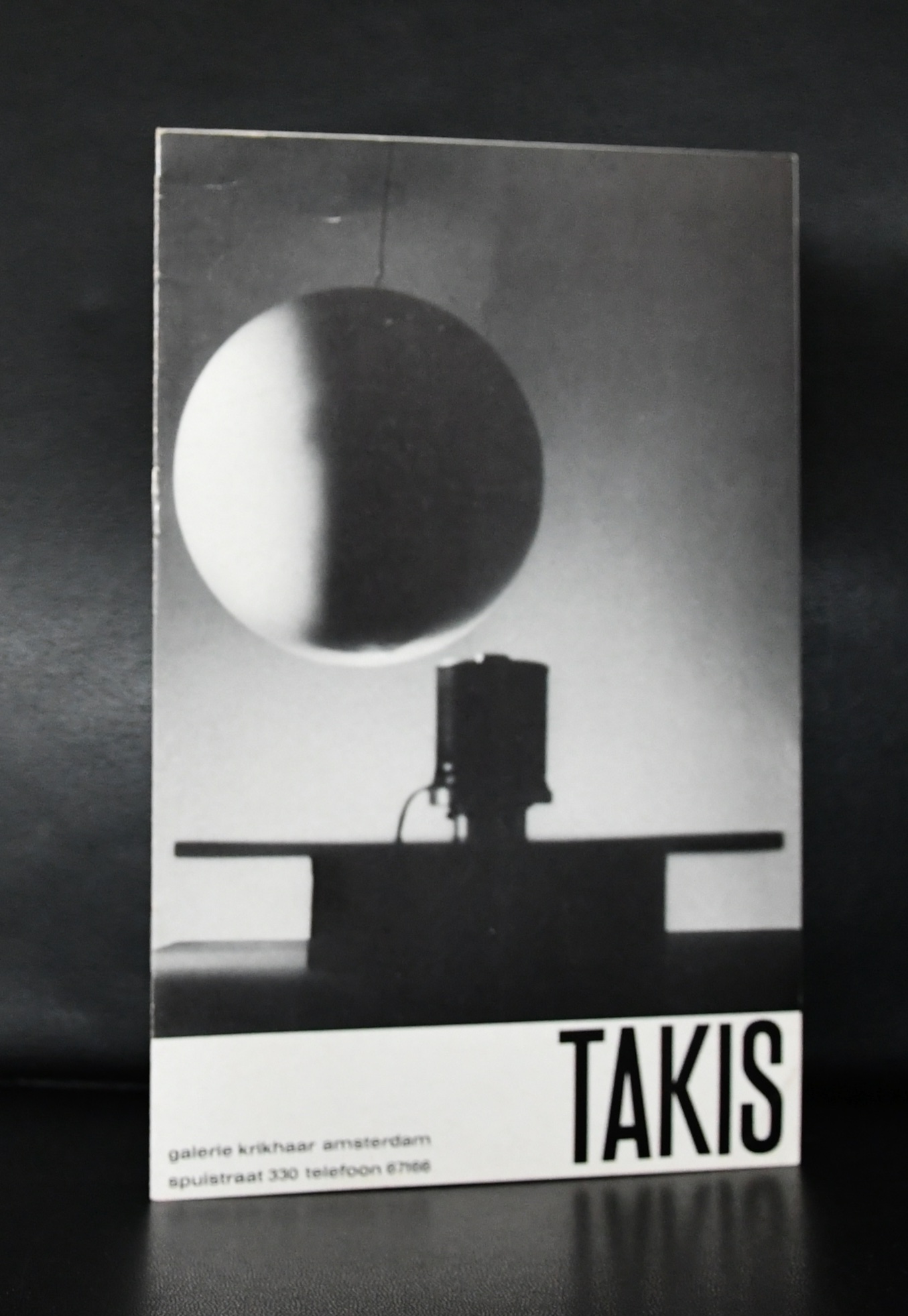
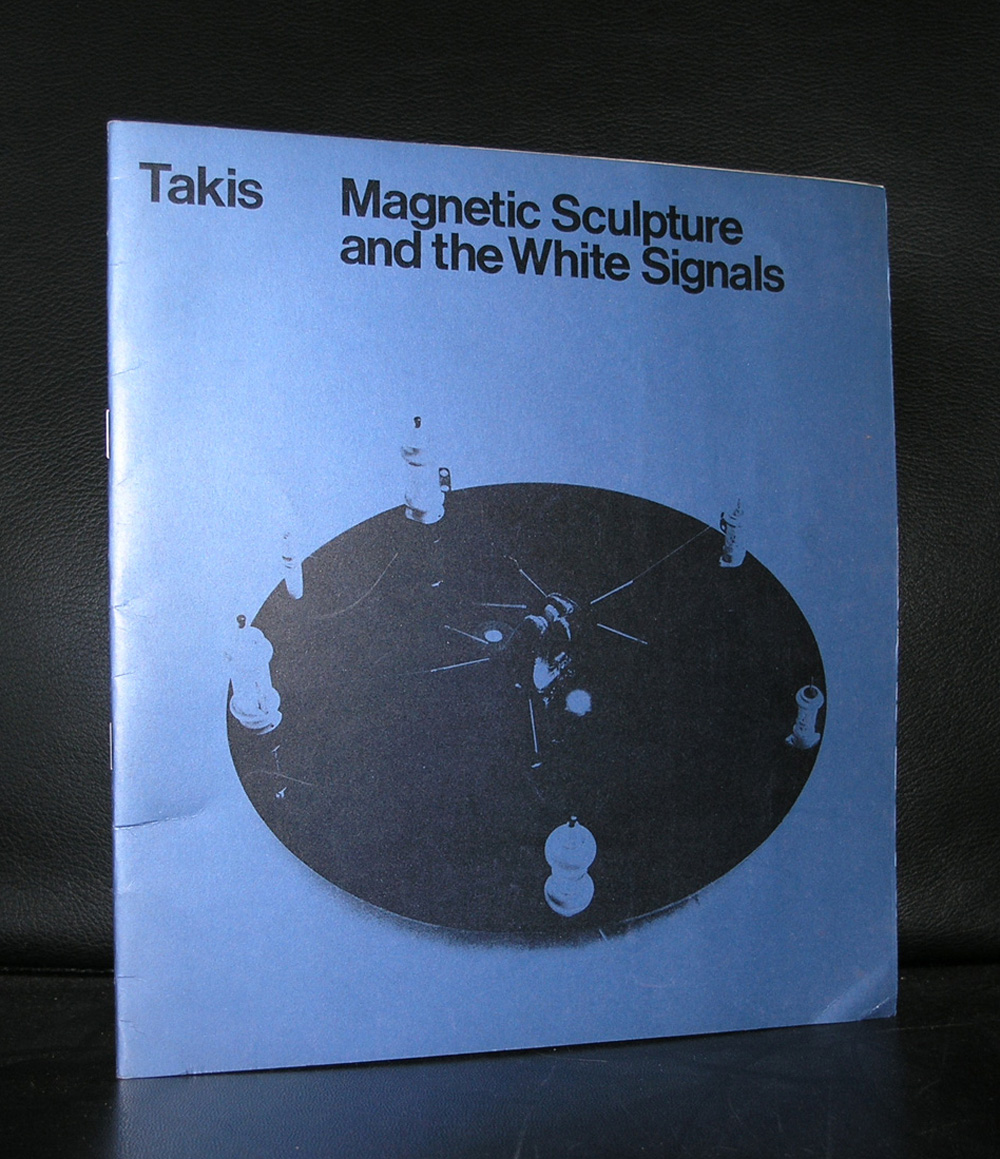
Panagiotis Vassilakis, born in Athens and known as Takis (1925-2019), spent a lifetime pushing the boundaries of art, venturing into territories once reserved for trailblazing physicists. Recognized as a prominent figure of the kinetic art movement in the 1960s, his creations ranged from sculptures and paintings to performances and sound pieces, all incorporating intangible energies as a fourth dimension – with a particular focus on magnetism, his enduring fascination.
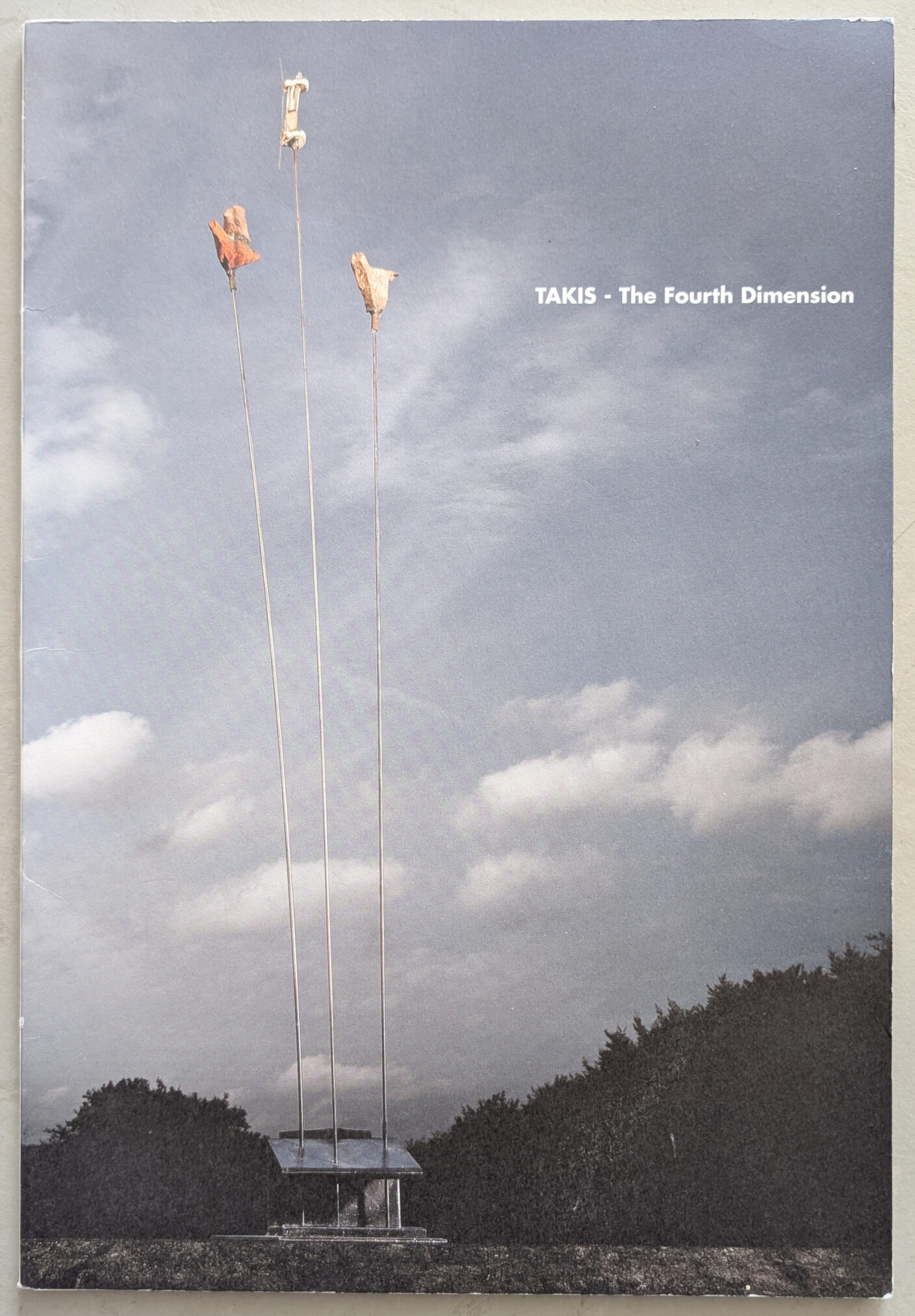
Amidst his multitude of creations utilizing electromechanical contraptions, oftentimes procured from military surplus outlets, stands the “Signals” series – antenna-like sculptures crowned with metallic structures or luminous bulbs that sway with the slightest vibrations. Takis also crafted reliefs, paintings, and self-propelling sculptures that utilize magnets to animate metallic objects dangling near their surfaces. In another series, labeled “Musicals”, automated instruments harness electromagnets and electric guitar pickups to produce resonant sounds that the artist deemed as “raw music”.
Takis, an autodidact and self-proclaimed “instinctive scholar”, gained recognition that led to an invitation to serve as a researcher at the Massachusetts Institute of Technology in 1968. He delved into the realm of technological discoveries, ancient philosophy, and Zen Buddhism, weaving together unique and often mystical forms embodying time, space, and energy.
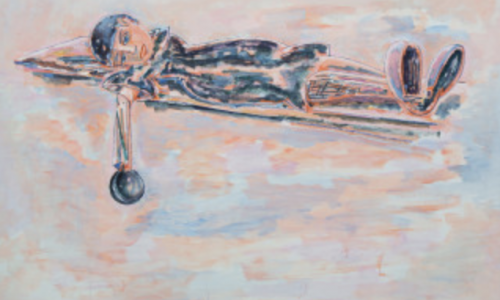
An active presence in Paris, London, New York, and his homeland of Greece, Takis crossed paths with renowned figures such as the Beat poets, The Beatles, and Marcel Duchamp, who famously dubbed him as “the ploughman of magnetic fields and signalman on soft railroads.” Throughout his career, Takis infused his research with a social undertone, viewing his creations as forces for peace and healing. In 1960, he initiated his own version of the Cold War space race, suspending poet Sinclair Beiles mid-air using magnets as part of a public event where the poet recited Takis’ anti-war “Magnetic Manifesto”, preceding Yuri Gagarin’s groundbreaking flight a year later. Additionally, in 1969, he co-founded the Art Workers Coalition in New York, advocating for artists’ rights and diversity in museums. Until his passing, the artist helmed the Takis K.E.T.E., founded in 1986, a research center for the arts and sciences in Athens that furthered his studies and their practical applications in improving the quality and longevity of life. Furthermore, he also delved into Solar Yoga, a unique form of yoga he developed focused on drawing energy from the sun.
Since the 1960s, Takis has participated in numerous international exhibitions, including Documenta in Kassel, Germany (1977 and 2017); the Venice Biennale (1995); and the Paris Biennale, where he was awarded first prize 1985. More recently, his oeuvre has been showcased in significant solo exhibitions at Stavros Niarchos Foundation Cultural Centre (SNFCC), Kallithea, Greece (2021); MACBA Museu d’Art Contemporani de Barcelona (2019); Tate Modern, London (2019); Palais de Tokyo, Paris (2015); and the Menil Collection, Houston (2015).
Among the esteemed institutions that hold Takis’ pieces are the Centre Pompidou, Paris; New York’s MoMA and Guggenheim Museum; Houston’s Menil Collection; London’s Tate; and the Peggy Guggenheim Collection in Venice. In 1987, Takis completed his Foret Lumineuse (Luminous Forest), a multi-part installation of ‘Signals’ in the Esplanade de La Défense, Paris, making it the city’s largest public art commission.
www.ftn-books.com has currently 3 Takis titles available.