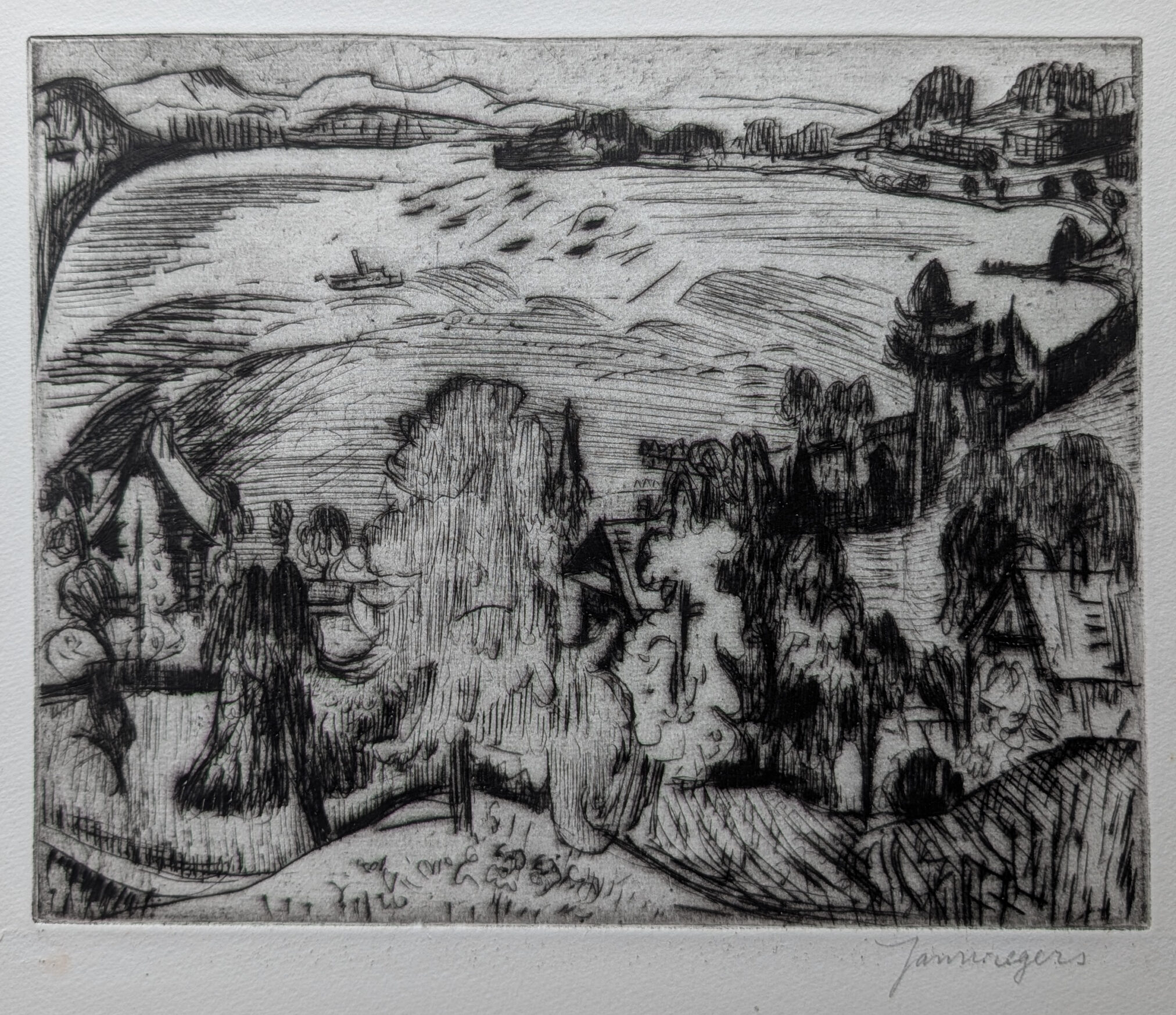
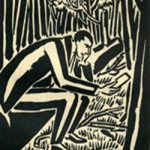
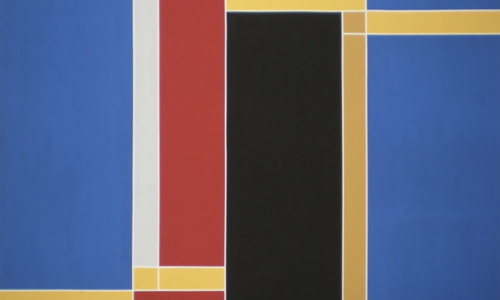
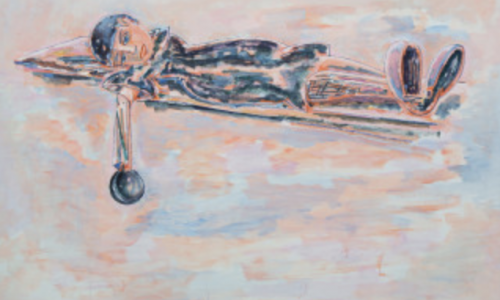
At the young age of thirteen, Jan Wiegers was enrolled as a student in the three-year introductory course at Minerva. Due to health reasons, he had to cancel his sculpting lessons and shifted his focus to painting. After completing his studies, he traveled to Germany in 1911 to work and in 1912, he attended the Sonderbund exhibition in Cologne, a prominent international display. He returned to the Netherlands in 1914 and continued his education at the Minerva Academy. He also took classes at academies in Rotterdam and The Hague. In 1918, Wiegers was one of the founders of De Ploeg.
In 1922, Wiegers received invitations to exhibit his work in Paris and Antwerp. In 1923, he became the chairman of De Ploeg and later served as vice secretary. He was highly active in the organization. In 1930, he resigned for a year due to a conflict. Together with Van der Zee, he proposed the international exhibition in Groningen in 1933 and played a crucial role as the secretary in preparations. He also exhibited his work in Budapest in 1933. In 1934, Wiegers moved to Amsterdam, but he remained a member of De Ploeg. After World War II, he participated in De Ploeg exhibitions until 1948.
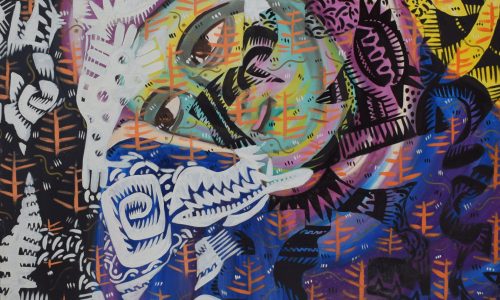
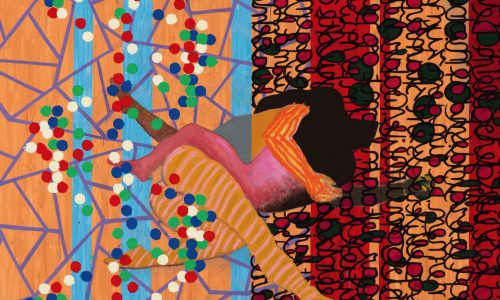
Even before 1920, Wiegers experimented with various modern styles. It is likely that the seed of Kirchner fell on a plowed field. At his first Ploeg exhibition after returning to the Netherlands, Wiegers made a large submission and amazed the critics. Under his influence, the Ploeg members developed a collective style that lasted until around 1927. According to Hofsteenge, this period is generally considered the most significant for De Ploeg.
www.ftnbooks.com has several Wiegers originals and publications available.