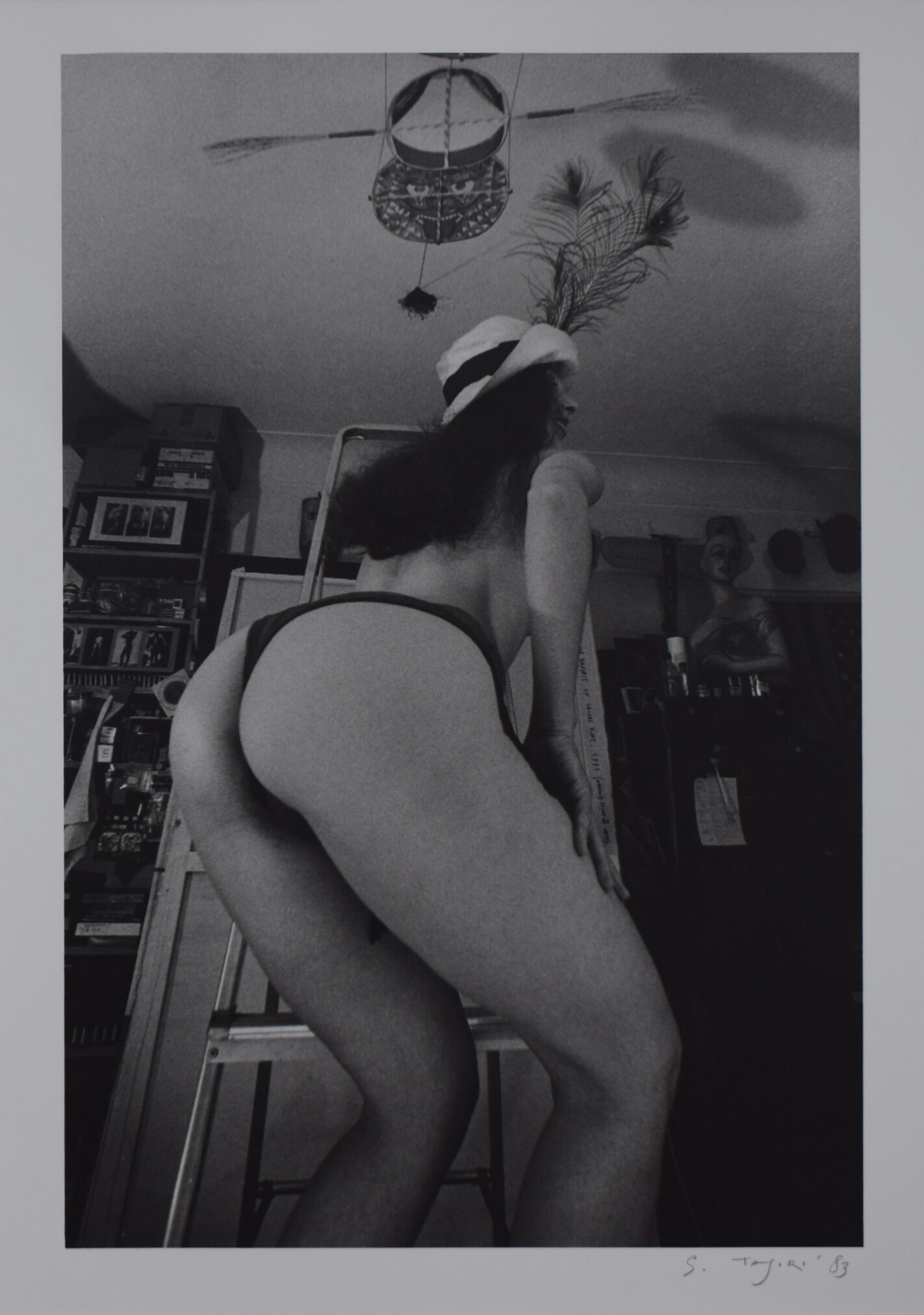
Shinkichi Tajiri was born in Los Angeles on 7 December 1923, the son of Japanese parents. He was primarily a sculptor, but also delved into photography, creating award-winning films, videos, and panoramic photos. His life and work were a fusion of Asian, American, and European influences.
Following World War II, he studied at the Art Institute of Chicago from 1947-1948 before moving to Paris. There, he trained with the sculptor Zadkine and later with the painter Léger. Tajiri was one of the first artists to embrace junk sculpture, which gained him recognition amongst the Dutch CoBrA artists living in Paris. He was invited to participate in the inaugural and second International Exhibition of Experimental Art (CoBrA) at the Stedelijk Museum, Amsterdam in 1949 and the Museé des Beaux Arts, Liège in 1951, respectively.
In 1956, Tajiri settled in Amsterdam and in 1962, he and his wife Ferdi and their two daughters moved to Kasteel Scheres in Baarlo near Venlo.
In the Netherlands, Tajiri was celebrated for his artistic versatility. He represented the country at Documenta II (1959), Documenta III (1964), Documenta IV (1968), and the 31st Venice Biennale (1962).
In 1969, Tajiri was named a professor at the Hochschule der Künste in Berlin at the request of its art students. He taught there until 1989.
During his time in Berlin, Tajiri experimented with a variety of mediums, including his own off-set printing press (X-Press), almost forgotten photographic techniques like the Daguerreotype, and computer-generated drawings on the Commodore Amiga.
Following Tajiri’s passing, the renewed Rijksmuseum (2013), Amsterdam acquired the sculpture Made in USA and Ferdi’s Wombtomb. These pieces are now on permanent display in the museum’s 20th-century collection.
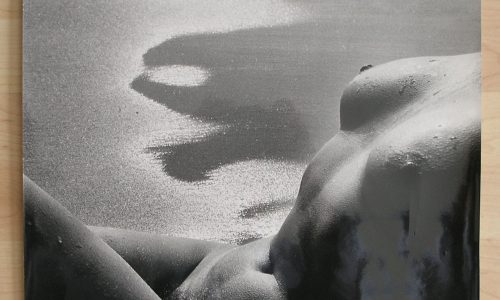
www.ftnart.com has now the CHRISTINA photo by Tajiri for sale.