
Trevor Sutton, a resident and laborer in the bustling city of London, pursued the realm of art in the revolutionary 1960’s, successfully attaining a post-graduate diploma in 1972. Despite the ever-changing landscape of art, Sutton remained firmly rooted in non-figurative expression, both in his paintings and prints. Undoubtedly, his talents have taken him to many corners of the world, including recent residencies in France and Ireland. While his artwork has been exhibited globally, his strongest connections exterior to the UK lie with Japan, Austria, Denmark, and The Netherlands.
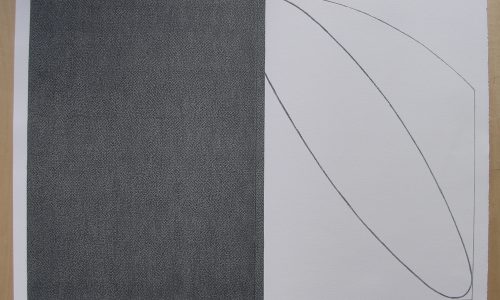
Upon entering Sutton’s studio, one will immediately notice an alluring systematic beauty and meticulous order that permeates the working environment. This same aesthetic extends to his artworks, with the restraints of a ritualistic and organized process intertwined with the sensuality of oil paint. In 2007, Sutton eloquently described a moment in his studio:
“As the light fades, minimalist harmonies fill the air. Floating white vapors, a pink and silver-grey horizon. The sound of the breeze. These moments become embedded in my paintings: the sound of perception, the essence of thought, painting as a snapshot of time.”
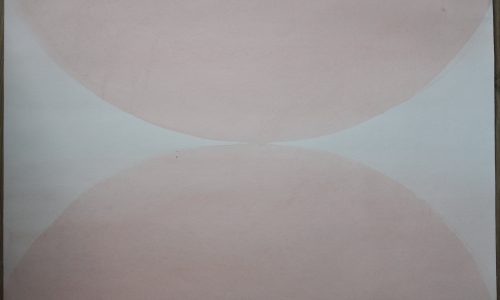
Sutton’s preferred canvas of choice is board, a deviation from his earlier works on canvas in the 1970’s. Throughout his illustrious career, he has also taken a keen interest in “shaped paintings,” often featuring circular formats in addition to the more traditional rectangle or square. In the 1980’s, Sutton embarked on a journey of multi-part units of painted shapes, the most notable of which were first exhibited at the renowned Lisson Gallery in 1981.
As the 90’s rolled in, Sutton’s paintings began to showcase remote and evocative abstract spaces, inviting viewers to immerse themselves in their own musings. These intangible worlds were captured in layers of semi-transparent oil-based glazes, each revealing a visual history of color and brushstrokes. This painstaking process adds a physical and atmospheric quality to the works, without explicitly providing specific pictorial or geographical details.
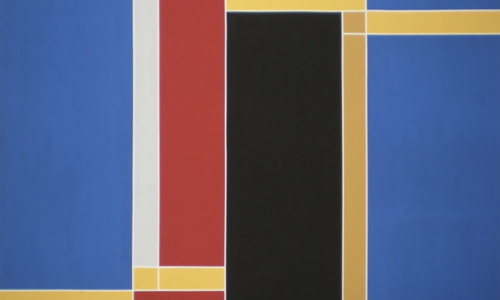
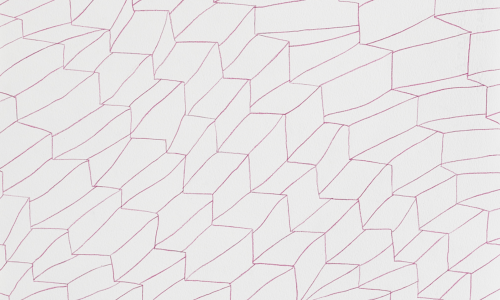
Beginning in 2008, the artistry of his canvases evolved, incorporating hand-collaged elements alongside direct manipulation of the surface. Alongside this, the grid resurfaced as a crucial structural component in his work. However, in his latest releases, he has dispensed with collage and returned to painting directly on the surface. These new pieces are fueled by a seemingly illogical interpretation of existence, one that is eventually restructured by the grid’s hierarchy. While the paintings retain a clear history of movement and marking, their physicality is governed and contained by the grid. His color choices are instinctive and responsive, encouraging fluid patterns and rhythms that evoke a kind of visual symphony.
www.ftn-books.com has the Irish paintings publication now available.
























This gave me a whole new perspective on something I thought I already understood. Great explanation and flow!
Your content never disappoints. Keep up the great work!
Keep writing! Your content is always so helpful.
You explained it in such a relatable way. Well done!
Thanks for addressing this topic—it’s so important.
This was easy to follow, even for someone new like me.
I love how clearly you explained everything. Thanks for this.
I really appreciate content like this—it’s clear, informative, and actually helpful. Definitely worth reading!
Gotta say, lucky505 looks pretty sweet. Exploring it now. What are your thoughts? Find out more lucky505
F8bet05…another betting site, I reckon. Need to see what their odds are like, and if they actually pay out. Worth a look: f8bet05