

Born into an affluent Milanese household, he departed Italy in 1944 to evade military service and escape the ire of local authorities. His academic background included studies in law at the University of Milan, alongside artistic training at the Brera Academy.
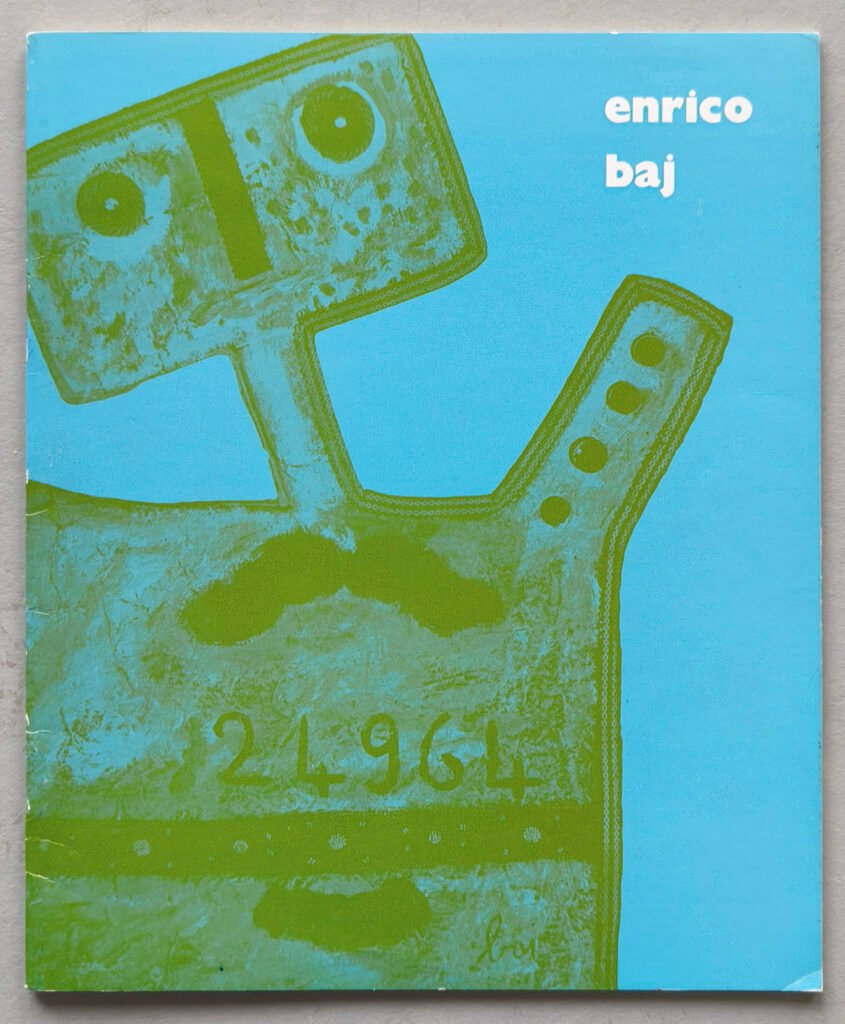
He co-established the *arte nucleare* movement alongside Sergio Dangelo in 1951; distinct from contemporary abstraction, this collective maintained a staunchly political character, with Baj himself maintaining close ties to anarchist circles. He is perhaps best recognized for his “Generals” series, which utilized discarded items—such as ribbons and military hardware—to construct grotesque, satirical figures.
Throughout his career, he frequently incorporated the aesthetic legacies of masters ranging from Leonardo da Vinci to Picasso, occasionally producing direct reinterpretations of their iconic compositions.
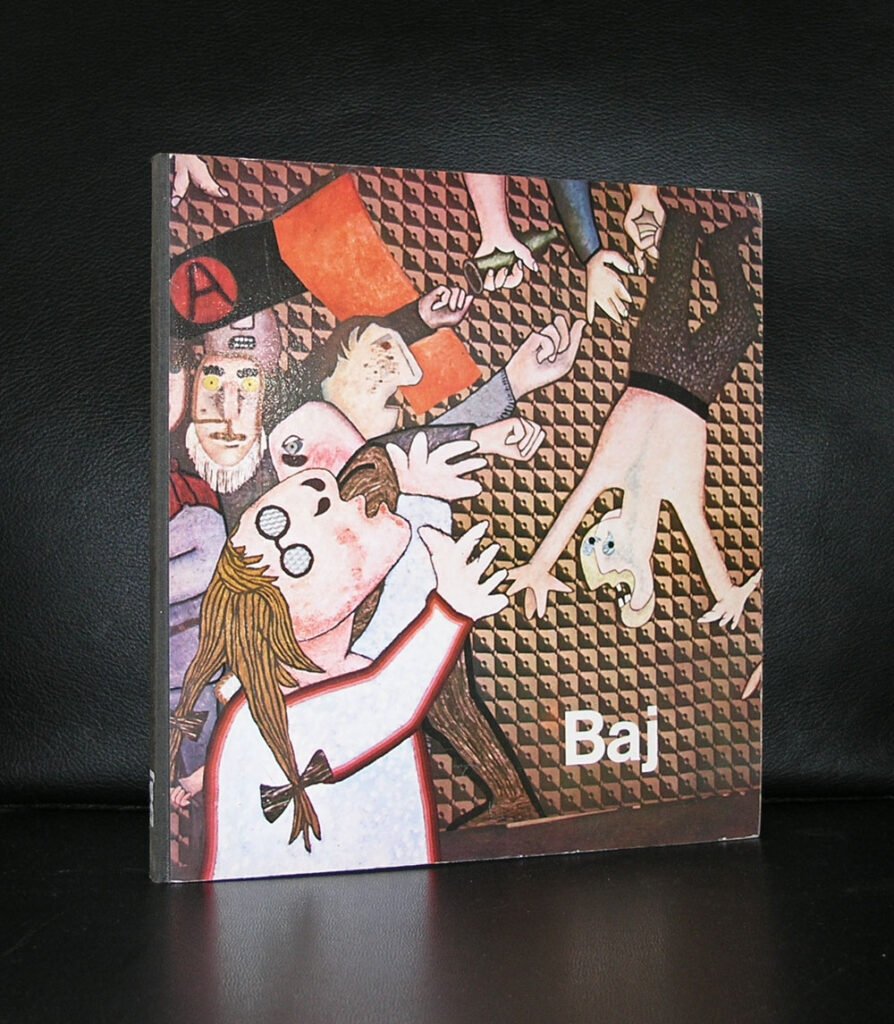
His output remained deeply engaged with politics; notably, the 1972 exhibition of his monumental piece, *The Funeral of the Anarchist Pinelli*—an homage to Carlo Carrà’s 1911 work *The Funeral of the Anarchist Galli*—was prohibited following the assassination of the police official implicated in Pinelli’s death while in custody. His sociopolitical commitment persisted into his later years: in 1989, he crafted thirty marionettes for Lorenzo Ferrero’s opera *Le Bleu-blanc-rouge et le noir*, scripted by Anthony Burgess for the French Revolution’s bicentennial. Toward the end of his life, he produced a cycle of protest paintings directed at the political ascent of Silvio Berlusconi. He passed away in Vergiate, Italy, in 2003.
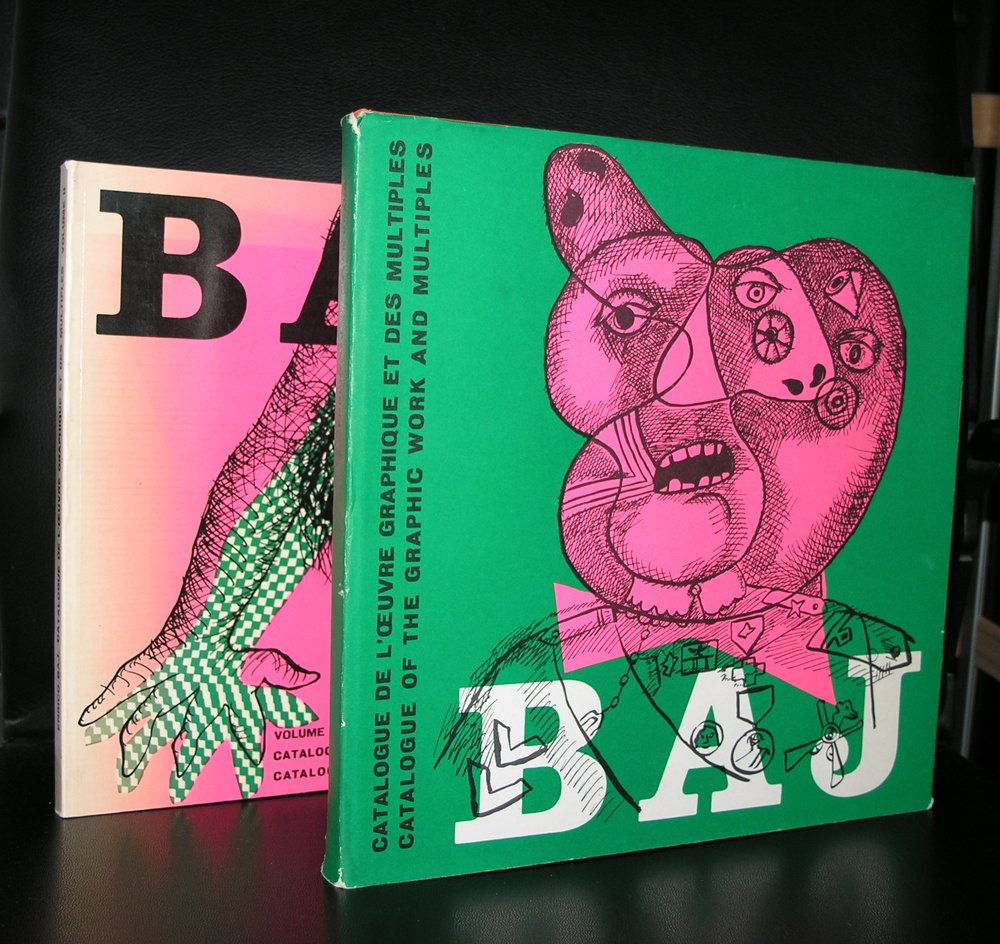
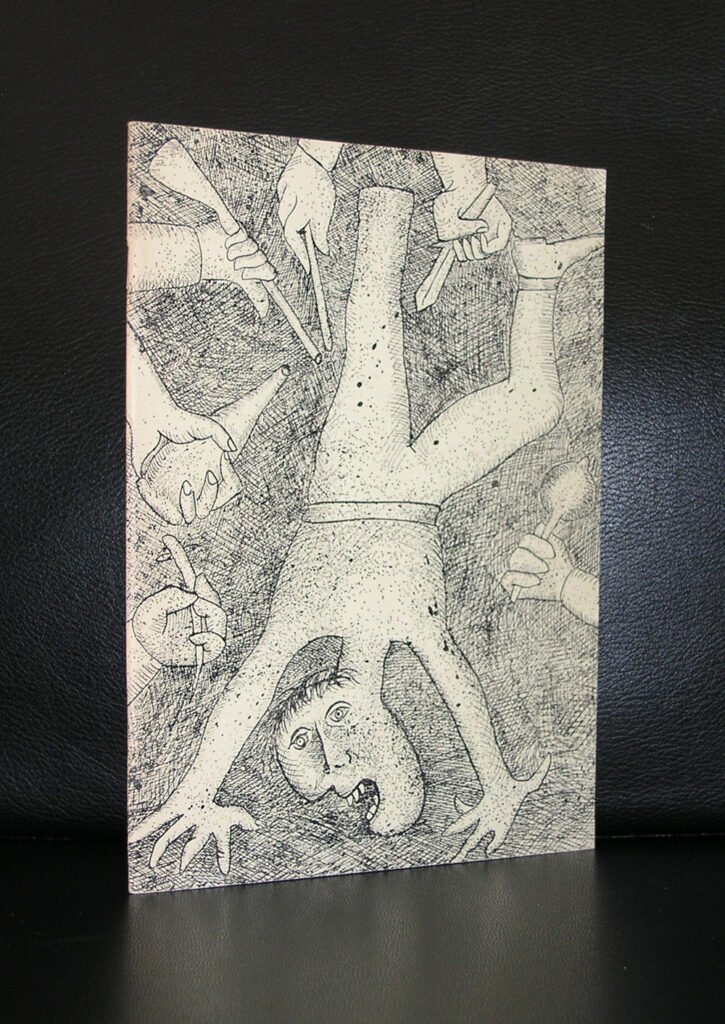
www.ftn-books.com has several Baj items available.