Posted on 9 Comments

William Morris (1834-1896)

Inspired by a projcet that my wife was doing for her work. I noticed the raised interest in the classic designs of William Morris and the use of these complex, but classic designs in Modern and Contemporary interior designs. Contemporary furniture and lightning is chosen with a background on one of the walls designed by William Morris. And not one, but i saw the use of William Morris wallpapers in multiple of her designs.


Throughout his life, William Morris was fascinated by textiles and the techniques he needed to master to produce the effects he saw and admired in historical furnishings.

Satisfying his need for a manual as well as an intellectual engagement with design, textiles also offered Morris the scope to develop his talent for pattern across a huge number of different products. The V&A has extensive collections of his work in textiles – ranging from examples of his first experiments in embroidery in the early 1860s through to the imposing tapestry panels he helped to create only a few years before his death.

These dessigns now certainly have proven to be timeless. Many of these are over 150 years old, but they remain fresh and my guess is they  still will be used in another 100 years.


The above publication is available at www.ftn-books.com

Posted on 169 Comments

Dieter Asmus (1939)

Schermafbeelding 2021-09-10 om 13.38.12

I first noticed Asmus when i was researching Dieter Hiessere , another German Pop Art artist. Dieter Asmus started his career in 1964-1965 when his early realistic paintings were demonstrated to the public for the first time. At the same period, along with his fellows, German painters Peter Nagel, Dietmar Ullrich and Nikolaus Störtenbecker, he founded in 1965 the artistic group dubbed Zebra. Its main goal was to gather all German realist artists.

At the beginning of the 1970s, Asmus got acquainted with an art historian Armin Schreiber whose wife was Brigitte Kronauer, a writer. Three friends established a publishing company which issued the debut Kronauer’s novel illustrated by Asmus.

Since that period, Dieter Asmus exhibited at various prestigious galleries in London, Rome, Copenhagen, Rotterdam and Paris.

Now the artist lives and works in Hamburg, Germany. He creates his artworks in oil using such photography technics as snapshot, color balance and clipping.Dieter Asmus is a prolific artist, one of the key figures in contemporary figurative art whose artistic talent and imagination were marked by many awards and scholarships.So, in 1967, at the beginning of his artistic journey, Asmus became a recipient of three scholarships, those from German Academic Scholarship Foundation, French government and from the German Academic Exchange Service which allowed the artist to go to London. These ones were followed in 1971 by the art scholarship from the Federal Association of German Industries (BDI). Nowadays, Asmus’s artworks are acquired by such prestigious museums and galleries as The Albertina in Vienna, Austria, the National Gallery of Berlin, Staatsgalerie in Stuttgart, Hamburger Kunsthalle and the National Gallery of Modern Art in Rome.

www.ftn-books.com has one Asmus title available ( www.ftn-books.com)

asmus

Posted on 16 Comments

Jonas Weichsel (1982)

Schermafbeelding 2021-09-08 om 15.05.42

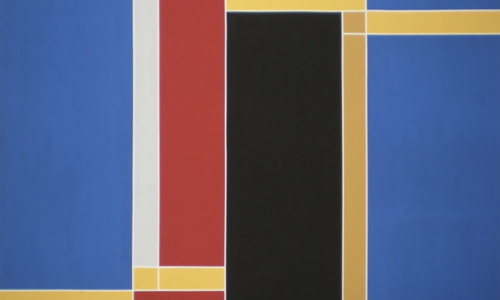
Weichsel is without doubt one of the youngest artists that had a one man show at the Josef Albers Museum in Bottrop and….deservedly. His works have a minimalist quality and are bright filled with color. Just see his show and it makes you comfortable and happy at the same time. Thre is nothing to distract….just the composition.

He creates minimalist paintings of uncanny precision and impalpability, which upon closer inspection translate into sensuous, lived experiences. Early on, Weichsel developed his unique analytical and systematic painting technique, which he continues to pursue often combining digital and plotting techniques with hand-painted elements to explore the possibilities and limits of painting and the boundaries between immateriality and a tangible, material presence. His paintings inherit a deceptive simplicity and unfold their full power only in the contemplation of the original.

Schermafbeelding 2021-09-08 om 15.03.30

Jonas Weichsel, born 1982 in Darmstadt, Germany, first studied in Mainz and Düsseldorf before completing his Meisterschüler with Judith Hopf at Städelschule Frankfurt. In 2016, he was awarded a residency at the Villa Romana in Florence, Italy. In 2012, he won the Karl Schmidt-Rottluff Stipendium after having been awarded the Dies Academicus—the Prize of the Johannes Gutenberg-Universität Mainz—alongside a scholarship from the Studienstiftung des Deutschen Volkes in 2009. Recent solo exhibitions include the Joseph Albers Museum, Bottrop (2018), Museum Wiesbaden (2016), and Deutsche Bundesbank, Frankfurt a.M. (2013). Important group exhibitions include the Museum of Modern Art, Frankfurt (2018; 2017; 2011), Kölnischer Kunstverein, Cologne (2017), Kunstverein Braunschweig (2016), Kunsthalle Düsseldorf (2016), Villa Romana, Florence, Italy (2016), Frankfurter Kunstverein (2015), Kunsthalle Wiesbaden (2015), Kunsthalle Mainz (2015; 2010), Kunstraum Bethanien, Berlin (2015), Salondergegenwart, Hamburg (2013), Kunstmuseum Wiesbaden (2012), Heidelberger Kunstverein (2011), Wilhelm Hack Museum (2010), and Nassauischer Kunstverein, Wiesbaden (2010). Jonas Weichsel lives and works in Frankfurt a.M.

The Josef Albers Museum poster is now available at www.ftn-books.com

weichsel a

Posted on 3 Comments

Peter Alma (1886-1969)

Schermafbeelding 2021-09-10 om 15.17.17

For me the period between the two world wars ( Interbellum ) is the strongest for Peter Alma. In these years he made his most important works. Communist and artist at the same time, he was very much influenced by the socialist and communist art from the early decades of the 20th century.

Among his friends Hildo Krop, Berlage and Charley Toorop. Unfortunately he never became the famous artist he would have deserved to be. This means that his (graphic) works can be bought at very reasonable prices and at auction you can become outright lucky for some 50 Euro or so. I compare his graphics with the best Gerd Arntz made in his prime and beside their artistic value these works belong to the strongest graphic works from then first half of the 20th century.

www.ftn-books.com has the Stedelijk Museum Alma catalogue available.OLYMPUS DIGITAL CAMERA

BTW. the above catalogue was designed by another great from last century. Piet Zwart did the design.

Posted on 6 Comments

Mari Andriessen (1897-1979)

a Young Mari Andriessen

You might find his sculptures a bit outdated, but they are still strong and are in most cases part of dutch history. There is Lely , the man who designed the AFSLUITDIJK, the DOKWERKER and many others that are equal iconic. Andriessen was one of the most important sculptors from the first part of 20th century in the Netherlands, but his works seem to be almost forgotten. That is the reason of this blog. Andriessen is important for dutch art and deserves some extra attention. 

A nice touch is this cinematictribute from the  POLYGOON JOURNAAL in which his 70th birthday is commemorated.


The following Andriessen publication are available at www.ftn-books.com

Posted on 15 Comments

Zoltan Kemeny

Zoltan Kemeny

I had not heard of Kemeny before i visited the Cobra Museum where an exhibition was held on Zoltan & Madeleine Kemeny in 2004 (items available at www.ftn-books.com)

Zoltan Kemeny was born on March 21, 1907, in the hamlet of Banica, Transylvania, then part of Hungary. As an adolescent he learned to paint under the tutelage of a naïve sign painter. Apprenticed to a cabinet maker in 1921, he began to study technical drawing for furniture making in 1923. From 1924 to 1927 Kemeny took courses in architecture and interior decoration at the School of Decorative Arts in Budapest. Thereafter he enrolled in the School of Fine Arts in Budapest, where he studied painting from 1927 to 1930.

In 1930 Kemeny settled in Paris; he abandoned painting and for the next decade worked as a designer of forged metal objects, a fashion designer and at other trades. After spending the years 1940 to 1942 in Marseille, Kemeny moved to Zürich. There he resumed painting and supported himself as a fashion designer and, from 1952, as an editor for a fashion magazine. His first solo exhibition took place at the Galerie des Eaux-Vives in Zürich in 1945. The following year the artist’s first one-man show in Paris was held at the Galerie Kléber, and he met Dubuffet. Subsequent to this encounter with Dubuffet, Kemeny began to introduce commonplace found objects such as pebbles, beads and dried grass into his works, to produce collage and reliefs with crude, rough surfaces.

The character of Kemeny’s work changed markedly in 1951 when he made his first translucent, colored reliefs, in which objects are attached to glass sheets. He sometimes enhanced the luminosity of these reliefs by placing an electric light behind the glass. By 1954 the artist began to renounce crude materials in favor of metal, the medium he continued to use throughout his life. Kemeny obtained Swiss citizenship in 1957. In 1959 he was honored with a retrospective at the Kunsthaus Zürich. He gave up his work as a fashion designer to devote himself exclusively to sculpture in 1960, the year of his first one-man exhibition in New York, at the Sidney Janis Gallery. He executed several major commissions in his last years, including a brass sculpture for the municipal theater in Frankfurt. Zoltan Kemeny died on June 14, 1965, in Zürich.


Posted on 3 Comments

On Kawara (1932-2014)

On Karawa

On Kawara is one of the most enigmatic of modern artists. Like his forerunner Marcel Duchamp, Kawara retreated from the art scene, avoiding his own exhibition openings and declining to be interviewed, so that his public persona came to be defined solely through his work. But that work itself seems – at first sight – to offer little more reward to biographers. Instead, it methodically and meticulously documents the trajectory of On’s life, without apparent ornament, an art based on ideas rather than aesthetics which sits firmly within the tradition of Conceptual art associated with Joseph Kosuth and Lawrence Weiner. However, the extraordinary duration of Kawara’s process-based projects – one of which, his date-painting series Today, lasted almost fifty years, producing almost 3,000 individual works – and the meditative consistency with which he applied himself to his tasks, sets his oeuvre apart, and links his work to his background in Buddhist and Shinto philosophy. By drawing attention to the minutiae of daily existence, Kawara’s work focuses our attention on the most basic elements of our experience of the world: our location on the planet, and our passage through time.

With projects such as I Got Up and I Am Still Alive – which involved mailing postcards and telegrams to friends and benefactors, at irregular intervals, over several years – On Kawara not only abandoned the artisanal techniques that still defined modern art to some extent in the early 1960s, but, more importantly, outsourced the ‘completion’ of his work to anonymous third parties. In leaving the delivery of his telegrams and postcards, for example – in a sense the final stage of the creative process – to the US postal service and Western Union delivery schedules, On Kawara emphasized the significance of concept over aesthetic form in a far more radical way than modern artists had previously attempted, in line with the most radical tendencies of Conceptual art. For On Kawara contemporaries in Conceptual art please find a nice series of Art & Project publications at www.ftn-books.com

Posted on 20 Comments

Joachim Brohm (1955)

Schermafbeelding 2021-09-08 om 12.25.02

I never had seen his photographs. The first time was when i encountered work by Brohm at the Josef Albers Museum in Bottrop ( poster available at www,ftn-books.com). I was impressed mand saw similarities with dutch 17th century painter Hendrik Avercamp.

Joachim Brohm was one of the first photographers in Germany to take pictures exclusively in color starting in the late 1970s. “Color lent my pictures credibility in the documentary sense,” he explains, defining at the same time his artistic credo. His approach went against the trend at the time in that it did not exhaust all of the possibilities of color photography: Joachim Brohm challenged omnipresent advertising aesthetics with his photographic naturalism, staged productions with documentation, picture effects with austerity, vibrant, high-contrast colors with his muted tones. As a student, he met with incomprehension from his professors, but photographic role models such as Stephen Shore and Lewis Baltz, who would go on to enjoy world fame, encouraged him to continue on his chosen path. “The Americans presented seemingly trivial scenes, content and context appeared to be missing – many people were unable to make any sense of it.”

Schermafbeelding 2021-09-08 om 12.28.23

Joachim Brohm brought this approach to a higher level: He combined mostly deserted landscape scenes with his interest in social interaction, turning his photographs into small-scale studies of society. They show how people change the landscape – and how the landscape changes people. He took his photographs of the Ruhr region at a time when theme parks and artificial lakes were being built to help cast off the image of a desolate mining region. Joachim Brohm shows this transition from work to leisure which accompanies the transformation from rural to urban from the perspective of a neutral observer. He sends the viewer on a mystery tour: “I wanted to show people in an environment undergoing change: What do they look like, what are they doing, what activities stand out?”

Joachim Brohm reveals structures in the landscape that would otherwise remain hidden. The camera’s elevated position, which is characteristic of many of his photographs, reinforces the impression of photographic surveillance which he himself describes as “all over”. The absence of a clear focus, and a depth of field that covers the entire image, mean that the individual scenes merge to form a situational snapshot. “The whole picture is the motif – the viewer can choose his or her focal point.” In this way, Joachim Brohm draws our attention to the big picture – with an excellent eye for detail.

brohm a


Posted on 1 Comment

Frank van Hemert…Zeven (continued)

zeven hemert

The day before yesterday i wrote a blog on the ZEVEN series by Frank van Hemert. But it was far from complete. On another bookshelf i found the book Reconstructie , published by the Haags Gemeentemuseum and written by Franz Kaiser . This contains several more paintings from the ZEVEN series. The reason why i had missed this is that i put the book apart from the rest of the Frank van Hemert publications, since most of the paintings it contains have been painted with the Red/Pink color that has caused so much trouble for Frank. Most of these paintings are considered to be lost, since the paint drips literally on the floor and unfortunately there is at this moment no solution to preserve them. I am a collector and i have been warned to be careful with these paintings and therefore i had placed the catalogue at hand….just to remember to be careful, but here are the paintings still in their prime condition, but after 30 years it is highly probable that most of these have been damaged beyond repair and must be considered lost.

(except for the painting above the text, the condition is excellent of this superb painting)

Posted on 12 Comments

Visible Language

Because of a recent addition to my inventory here is the information on the VISIBLE LANGUAGE magazine. It is one of the leading publications in the world of graphic design and i have added some important volumes from the 70’s and 80’s to my inventory.

Visible Language is an American journal presenting visual communication research. Founded in 1967 as The Journal of Typographical Research by Merald Wrolstad, occasional Visible Language issues are co-edited with a guest editor-author.

The journal was founded with the primary tenet of the journal being that reading and writing together form a new, separate, and autonomous language system. The journal has evolved to focus on research in visual communication. The journal has covered the subject of concrete poetry, the Fluxus art movement, painted text, textual criticism, the abstraction of symbols, articulatory synthesis and text, and the evolution of the page from print to on-screen display. Guest editor-authors have included Colin Banks, John Cage, Adrian Frutiger, Dick Higgins, Richard Kostelanetz, Craig Saper, and George Steiner.

The journal was edited for 26 years (1987–2012) by Sharon Poggenpohl of the Illinois Institute of Technology’s Institute of Design, with administrative offices at the Rhode Island School of Design. It is currently edited by Mike Zender of the University of Cincinnati, which publishes and provides administrative offices for the journal.

Below a first selection of the volumes available: